When King Edward I’s army faced Scottish rebels at Falkirk in 1298, the outcome hinged not on courage or numbers, but on weapons technology. English longbowmen decimated William Wallace’s spearmen from 200 yards away, demonstrating how a single weapon could overturn centuries of military tradition. Medieval warfare wasn’t just about honor and chivalry—it was an arms race spanning nearly a thousand years, where innovations in weaponry repeatedly revolutionized how battles were fought and won.
Between the fall of Rome in 476 AD and the dawn of gunpowder warfare in the 15th century, European smiths, engineers, and soldiers developed an arsenal that would transform combat forever. These weren’t crude implements of barbarians; they were sophisticated instruments of war, each designed to counter specific threats and exploit tactical advantages. The crossbow could pierce plate armor at 100 paces. The halberd could unseat an armored knight. The trebuchet could hurl 300-pound stones through castle walls.
What made these weapons revolutionary wasn’t just their lethality—it was how they changed the social order of warfare itself. Expensive knightly armor became vulnerable to peasant-wielded pikes. Impregnable castles fell to siege engines. The democratic crossbow allowed a farmer with three weeks’ training to kill a knight who’d trained since childhood. From the arming sword at every nobleman’s hip to the massive trebuchets that redefined siege warfare, these 15 weapons didn’t just win battles—they reshaped medieval society and set the stage for modern military tactics.
1. The Longsword – Symbol of Knighthood
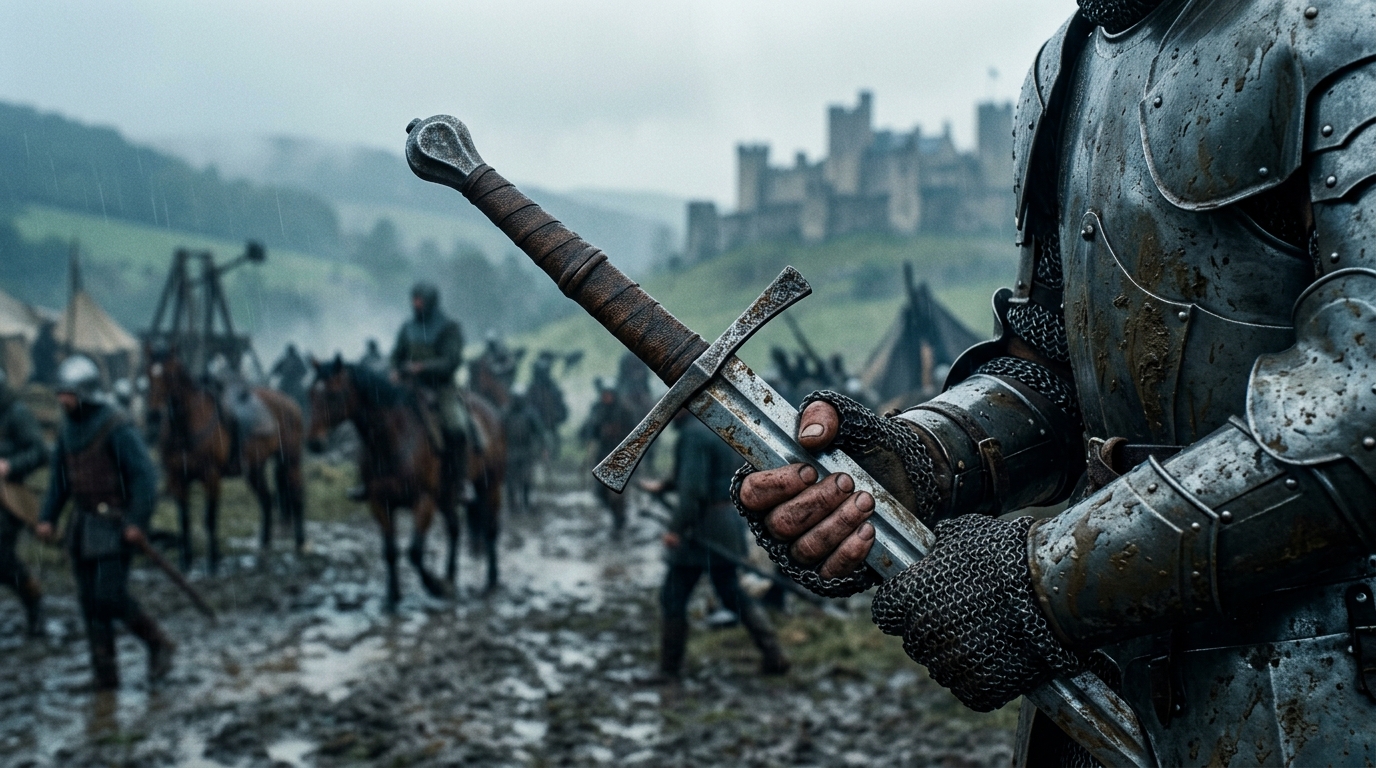
The longsword emerged in the 13th century as plate armor replaced chainmail, fundamentally transforming European combat. Measuring 40 to 48 inches total with a 33 to 43-inch blade, this versatile weapon earned the German name “hand-and-a-half sword” because it could be wielded one or both hands. Unlike earlier cutting swords, its tapered blade and acute point excelled at thrusting into armor gaps.
Masters like Johannes Liechtenauer developed entire fighting systems around the longsword in the 1380s. Knights learned techniques like half-sword—gripping the blade for leverage to thrust precisely at armor joints—and the “murder stroke,” using the crossguard as a hammer against armored opponents.
Beyond combat effectiveness, the longsword symbolized power and status. A quality blade cost roughly 150 days’ wages for a skilled craftsman, representing enormous wealth.
2. The Crossbow – The Great Equalizer
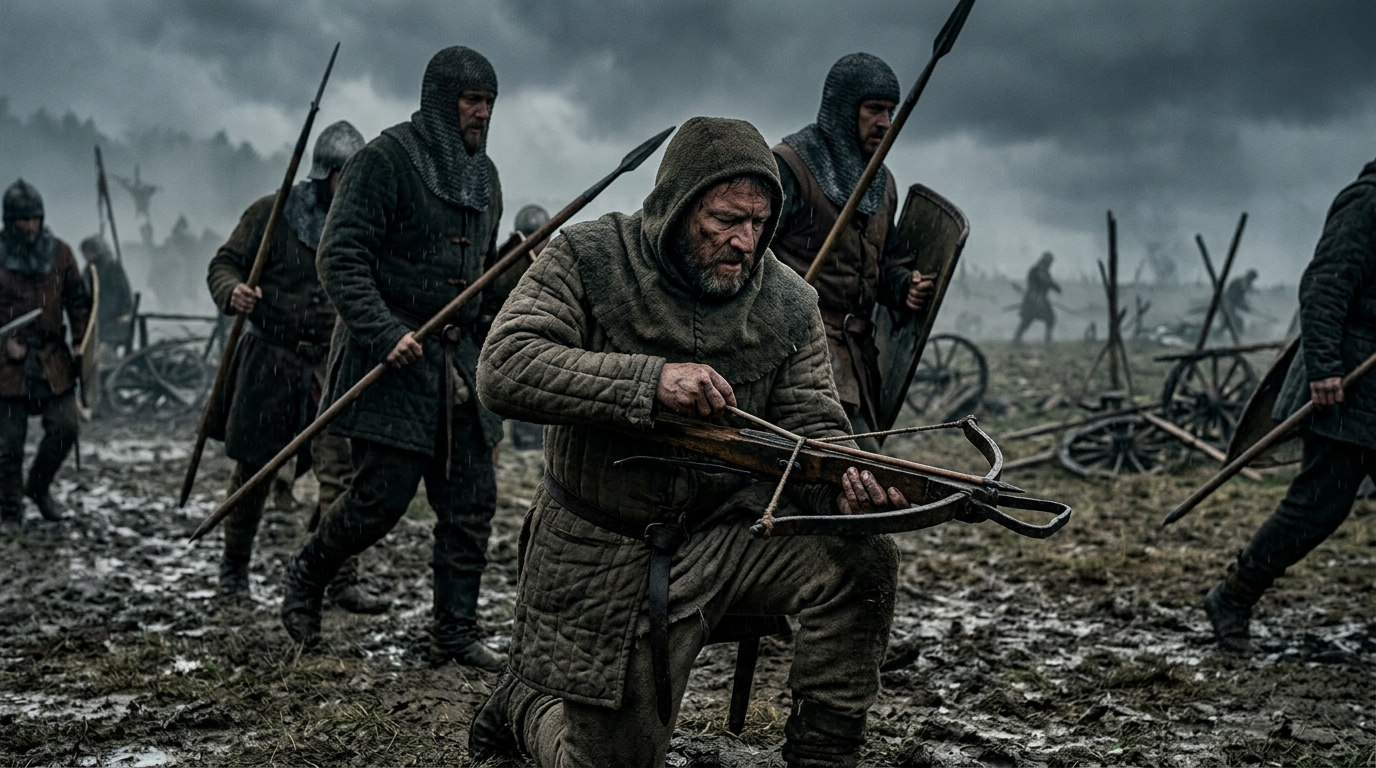
When Pope Urban II banned the crossbow in 1096, calling it “hateful to God,” he recognized its revolutionary threat: a peasant could kill an armored knight with minimal training. Perfected between 1000-1200 AD, the crossbow generated 600-1,200 pounds of draw weight—twice a longbow’s power—while requiring far less training time.
The weapon’s impact became clear at Hastings in 1066, where Norman crossbowmen defeated the English shield wall. By the 12th century, crossbows penetrated chainmail at 100 yards and plate armor at close range. Richard the Lionheart’s death in 1199 from a crossbow bolt during a siege proved no rank protected against this mechanical killer; gangrene claimed him 11 days later.
The crossbow’s revolutionary power lay in democratizing deadly force. While longbowmen needed years of childhood training, crossbowmen were combat-ready in weeks.
3. The Lance – Cavalry’s Crushing Force

The couched lance technique, developed around 1100 AD, transformed mounted warfare into devastating shock combat. Knights tucked the lance under their arm against their body, turning horse and rider into a battering ram. A charging knight at full gallop delivered approximately 1,200 pounds of force on a lance tip smaller than a silver dollar—enough to skewer opponents through plate armor and lift them off their feet.
Measuring 10 to 14 feet long and weighing 15 to 20 pounds, the lance’s effectiveness depended entirely on momentum at speeds around 15 miles per hour. Its success at the Battle of Adrianople in 1205, where Western European knights shattered larger Byzantine forces, sparked an arms race in armor and defense.
4. The Poleaxe – Armor-Piercing Brutality
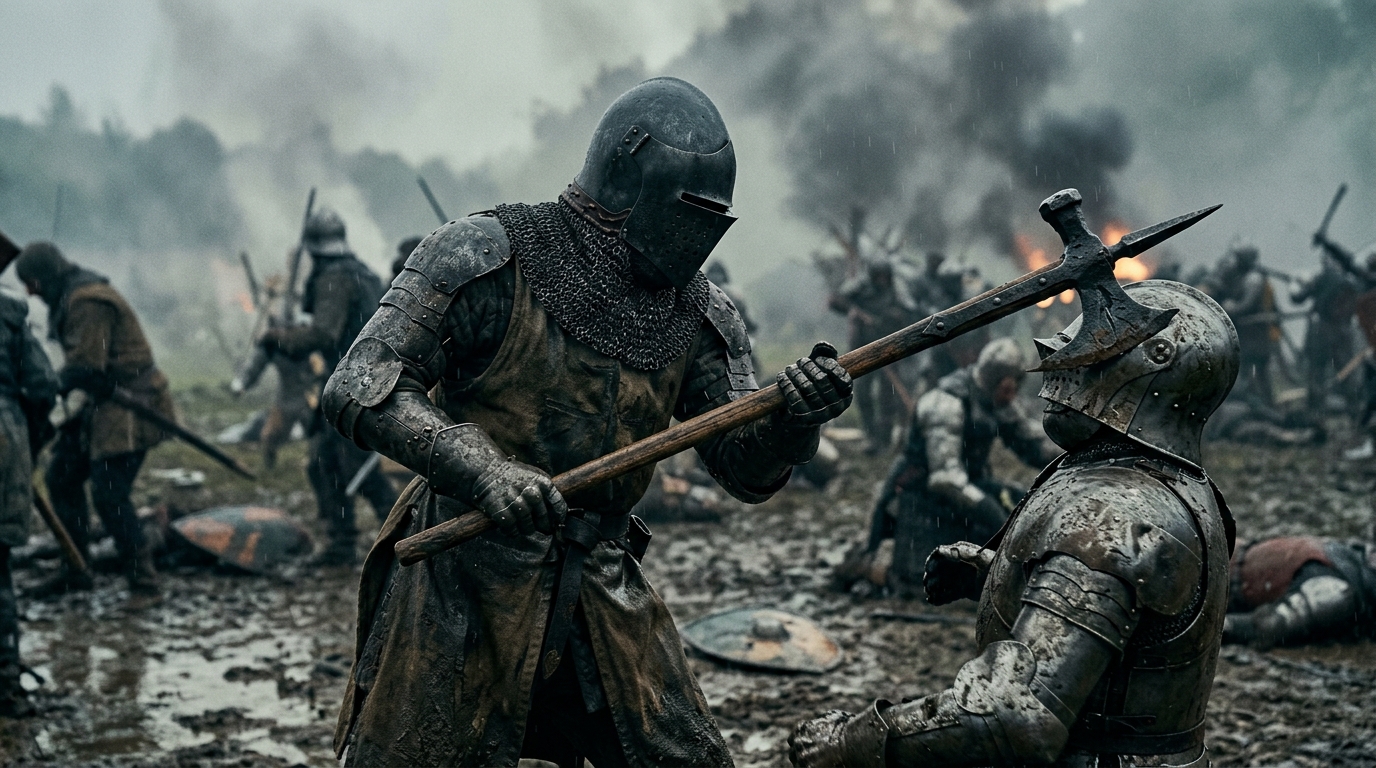
The poleaxe emerged in the 14th century as the ultimate armor-piercing weapon, combining an axe blade, hammer, and spike on a six-foot shaft. Knights adopted it to solve a critical problem: killing someone wearing 60 pounds of plate armor. The hammer delivered concussive force, the axe blade sheared through joints, and the spike punctured weak points.
At the Battle of Agincourt in 1415, armored knights wielded poleaxes in brutal melee combat, hammering at each other until helmets crumpled. Fighting manuals from the 15th century detailed 40 distinct techniques—tripping, hooking, and grappling moves that made poleaxe combat a violent chess match.
The weapon became revolutionary in judicial combat, a legal method of settling disputes where nobles fought in regulated arenas.
5. The War Hammer – Blunt Force Evolution

The war hammer evolved in the 15th century to counter plate armor, representing brutal medieval efficiency. Military versions were one-handed weapons weighing 2-6 pounds with 18-24 inch shafts, featuring a blunt face and spike or curved beak. The spike could punch through armor, while the hammer face delivered concussive trauma—even a helmeted blow could cause brain injury.
At the 1461 Battle of Towton, 43% of 38 recovered skeletons showed blunt force trauma consistent with war hammer strikes, many with depressed skull fractures. What made war hammers revolutionary was their accessibility. While Damascus steel swords remained expensive noble weapons, blacksmiths could forge serviceable war hammers cheaply. The Hussites, Bohemian rebels from 1419-1434, armed peasant soldiers with war hammers to devastating effect, destroying German crusader armies across five campaigns.
6. The Mace – The Cleric’s Weapon
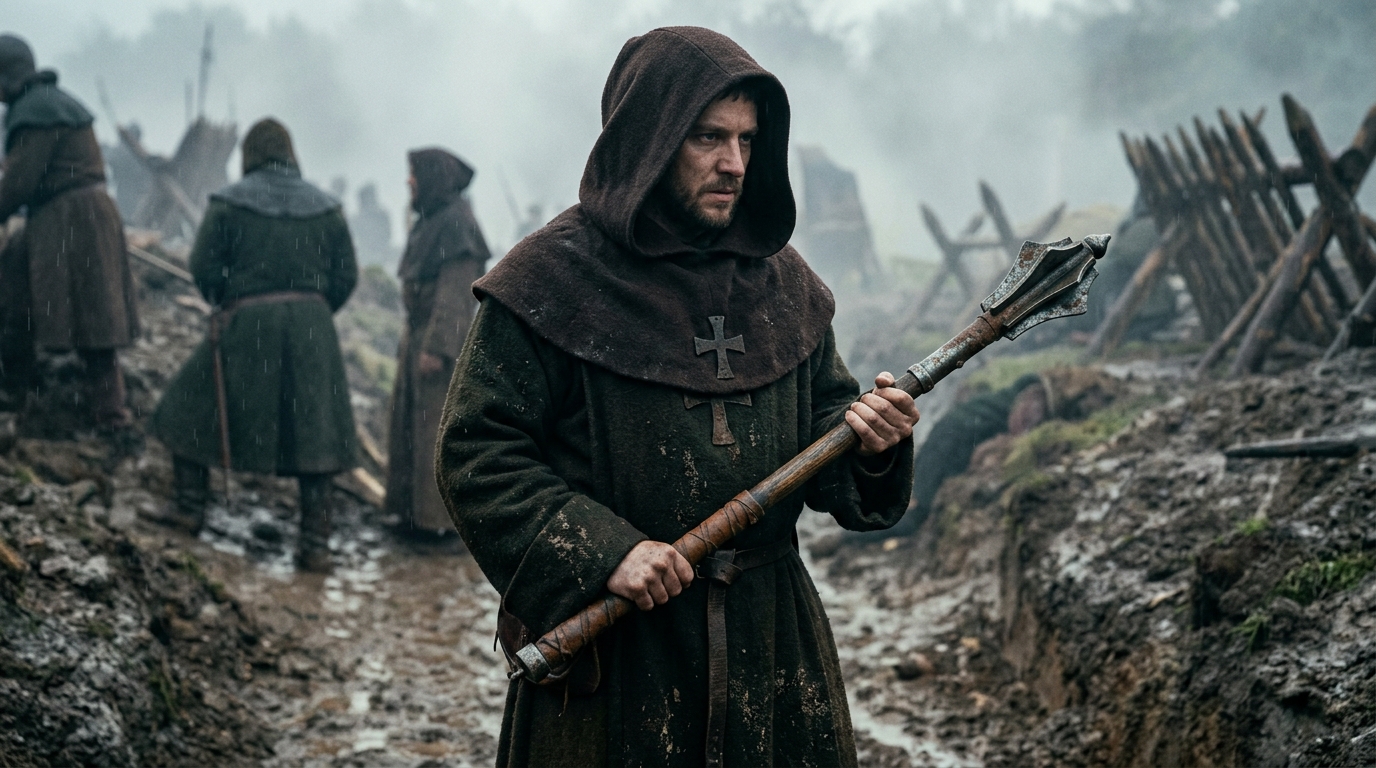
The medieval mace evolved from ancient clubs into a sophisticated weapon designed to counter chainmail and plate armor. Featuring a heavy metal head weighing 2 to 5 pounds on a 2 to 3-foot shaft, the mace delivered crushing blows that made cutting edges irrelevant. Its distinctive flanged head, with 4 to 8 protruding ridges, concentrated force while preventing deflection off curved armor surfaces.
What made the mace unique wasn’t just effectiveness, but its association with clergy. Church law forbade clerics from using edged weapons, but bishops could carry maces without technically “spilling blood”—crushing didn’t count as bloodshed in medieval canon law. Bishop Odo of Bayeux famously wielded a mace at the Battle of Hastings in 1066, depicted in the Bayeux Tapestry.
7. The Halberd – Infantry’s Swiss Innovation
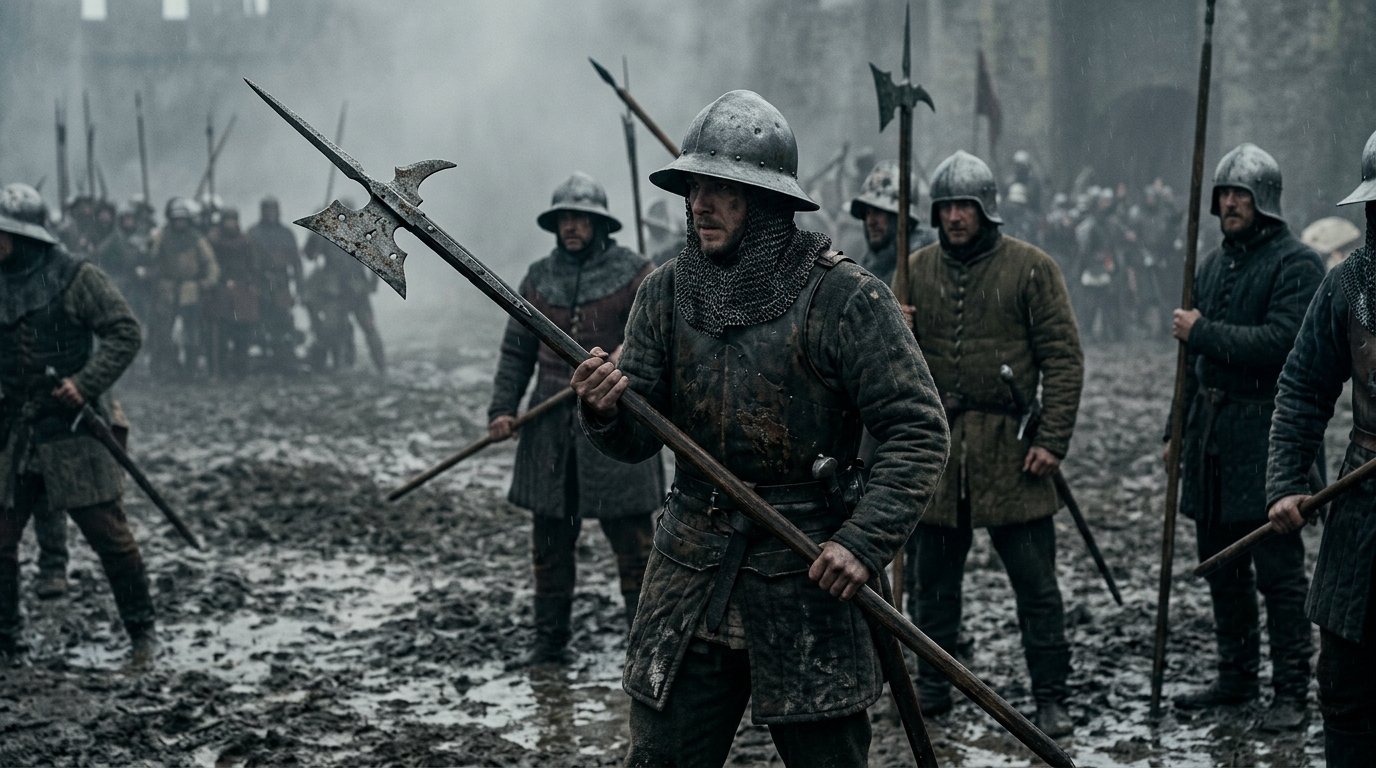
The Swiss developed the halberd around 1300 AD into the most versatile polearm in medieval warfare, combining an axe blade, spike, and hook on a 5 to 7 foot shaft. This three-in-one weapon could chop, thrust, and pull down mounted knights while keeping enemies at distance.
Swiss halberdiers proved devastating in battle. At Morgarten in 1315, they ambushed 9,000 Austrian knights, killing 2,000 with minimal casualties. Fighting in dense pike-and-halberd formations called “squares,” halberdiers protected pikemen while the pikes kept enemies at bay—a tactical innovation that proved disciplined infantry could defeat mounted nobility.
The halberd’s hook was specifically designed to yank knights from saddles, after which the axe blade or spike would finish them. This revolutionary weapon transformed warfare’s social order.
8. The Trebuchet – Medieval Siege Monster
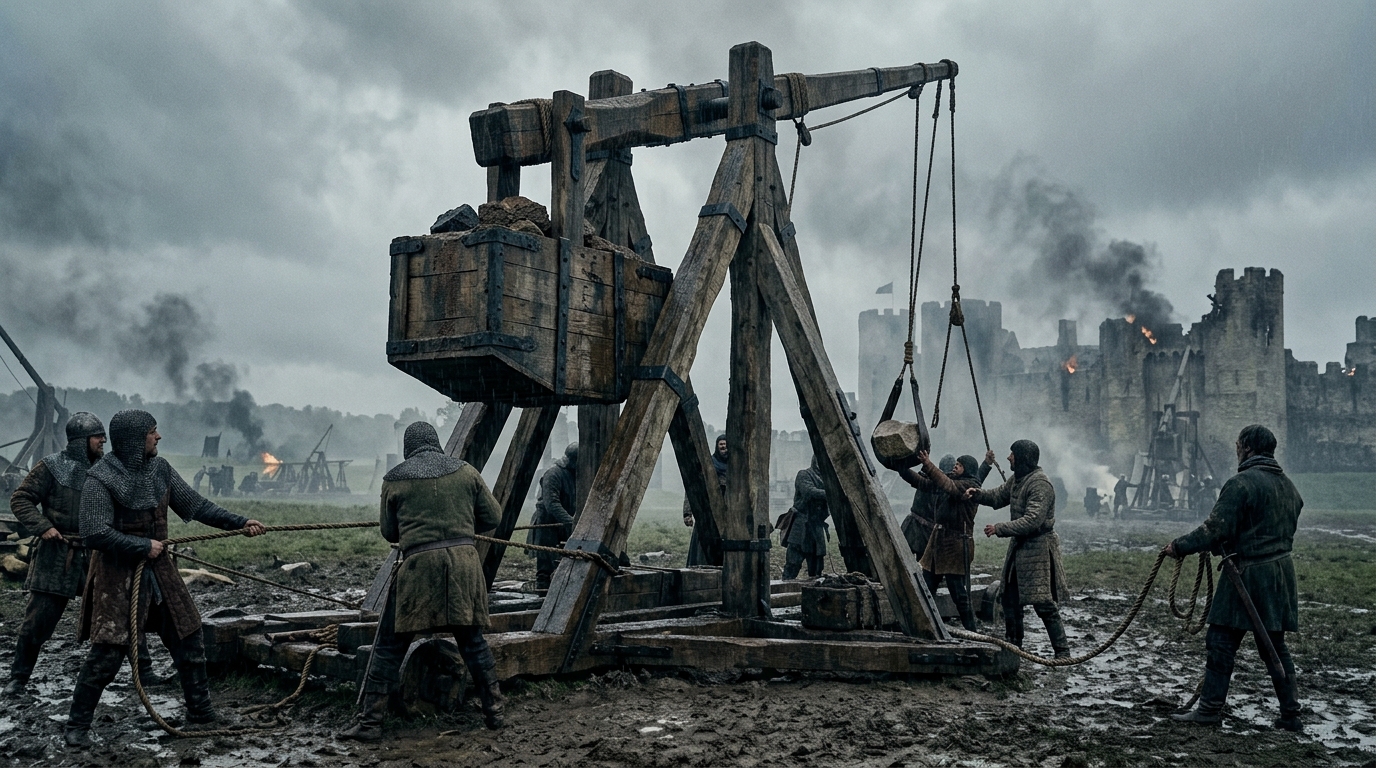
The counterweight trebuchet, perfected around 1200 AD, could hurl 300-pound stone projectiles over 300 yards with devastating accuracy. A massive 10-ton weight falling through gravity powered the 50-foot throwing arm, and these 50-foot-tall machines took weeks to build but could reduce castle walls to rubble in days.
At the Siege of Stirling Castle in 1304, King Edward I commissioned “Warwolf,” a trebuchet so large it required 30 wagons to transport and five master carpenters to assemble. Its projectiles punched holes through 200-year-old walls, and Edward reportedly delayed the castle’s surrender just to test his new weapon. One shot could kill dozens and shatter the defenders’ will to resist.
The trebuchet revolutionized medieval warfare by making castles vulnerable. Before the 13th century, well-supplied fortifications could withstand sieges for months or years.
9. The Arming Sword – Every Knight’s Companion

The arming sword, the standard one-handed sword of medieval knights from 1000 to 1400 AD, measured 28 to 32 inches in blade length and weighed 2 to 3 pounds. This versatile weapon could be drawn quickly and wielded with one hand while holding a shield, making it the workhorse weapon that accompanied knights through daily life—worn for self-defense, legal disputes, and combat.
The weapon’s design evolved to counter armor improvements. Early blades were broad for cutting mail, but by the 13th century, they became tapered with acute points for thrusting into armor gaps. Historian Ewart Oakeshott identified 13 distinct blade types in his typology. A quality arming sword cost about 100 days’ wages for a skilled craftsman in 1300—expensive but affordable for professional soldiers.
What made the arming sword revolutionary was its dual role as weapon and status symbol.
10. The Rondel Dagger – The Mercy Killer

The rondel dagger emerged in the 14th century as a specialized weapon for penetrating plate armor. Its distinctive round disc-shaped guards gave it its name, while its narrow, tapered blade could slip through helmet visors, mail joints, and armor gaps with surgical precision.
The dagger became infamous during the Battle of Agincourt in 1415, when English soldiers systematically killed wounded French knights with rondel daggers thrust through helmet openings. The brutal practice earned it the nickname “misericorde”—meaning “mercy”—though the term was grimly ironic. King Henry V even ordered captured French prisoners executed with these daggers when he feared counterattack, making the weapon a tool of mass execution.
What made the rondel dagger revolutionary was how it transformed medieval warfare economics.
11. The Flail – Chain and Chaos

The military flail consisted of a wooden handle 2-4 feet long attached by chain to a spiked metal head, emerging as one of medieval warfare’s most controversial weapons. The chain measured 6-12 inches, connecting to a striking head weighing 2-4 pounds. This design allowed the weapon to wrap around shields, strike from unexpected angles, and deliver crushing blows with centrifugal force.
Historians hotly debate the flail’s actual use. While contemporary art depicts flails, physical evidence remains scarce, leading some scholars to question widespread battlefield adoption. The Hussite Wars of 1419-1434 provide the clearest evidence—Czech peasant armies used flails (called “cep”) devastatingly against armored German crusaders.
What made flails revolutionary was their ability to defeat shields and armor through unconventional mechanics.
12. The Pike – Formation Fighting Perfected

The military pike, stretching 10 to 20 feet in length, revolutionized infantry warfare in the 14th and 15th centuries by creating formations that stopped cavalry charges. Unlike shorter spears, the pike’s length allowed pikemen to stand in dense formations with the first five ranks presenting weapon points forward, creating an impenetrable hedge of steel that horses refused to charge.
Scottish forces under William Wallace demonstrated the pike’s potential at the Battle of Falkirk in 1298, forming schiltrons (circular pike formations) that initially stopped English cavalry. Though Wallace lost to archers, his tactics inspired future developments. The Swiss perfected pike warfare between 1300 and 1500, developing the “pike square”—a formation of 6,000 to 8,000 men with pikes projecting outward.
13. The Pavise – The Shield That Changed Sieges
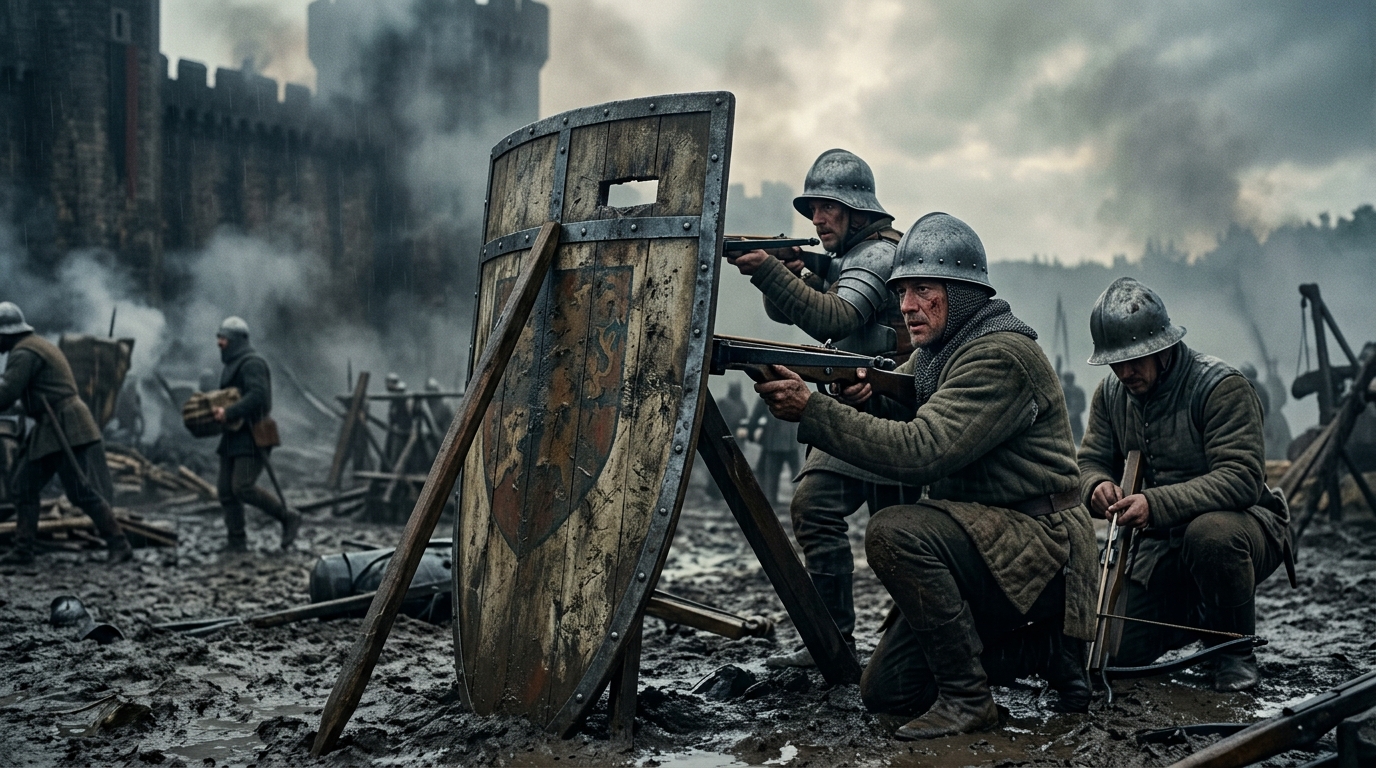
The pavise, a massive shield measuring 3 to 5 feet tall and 2 feet wide, revolutionized siege warfare in the 14th and 15th centuries. Standing on its own with a hinged prop, the pavise provided mobile cover for crossbowmen and siege troops. Weighing 15 to 30 pounds and constructed from layered wood covered in canvas or leather, sometimes reinforced with metal, these shields transformed crossbowmen from vulnerable missile troops into protected firepower.
Italian city-states like Genoa and Venice pioneered pavise use between 1350 and 1400. Genoese crossbowmen would plant shields in the ground, shoot from cover, reload safely, and repeat—creating mobile fortresses. The Battle of Crécy in 1346 demonstrated the pavise’s importance: Genoese crossbowmen forgot their shields and were slaughtered by English longbowmen in minutes, showing that without protection, they were defenseless targets.
14. The Pollaxe – Tournament Turned Battlefield
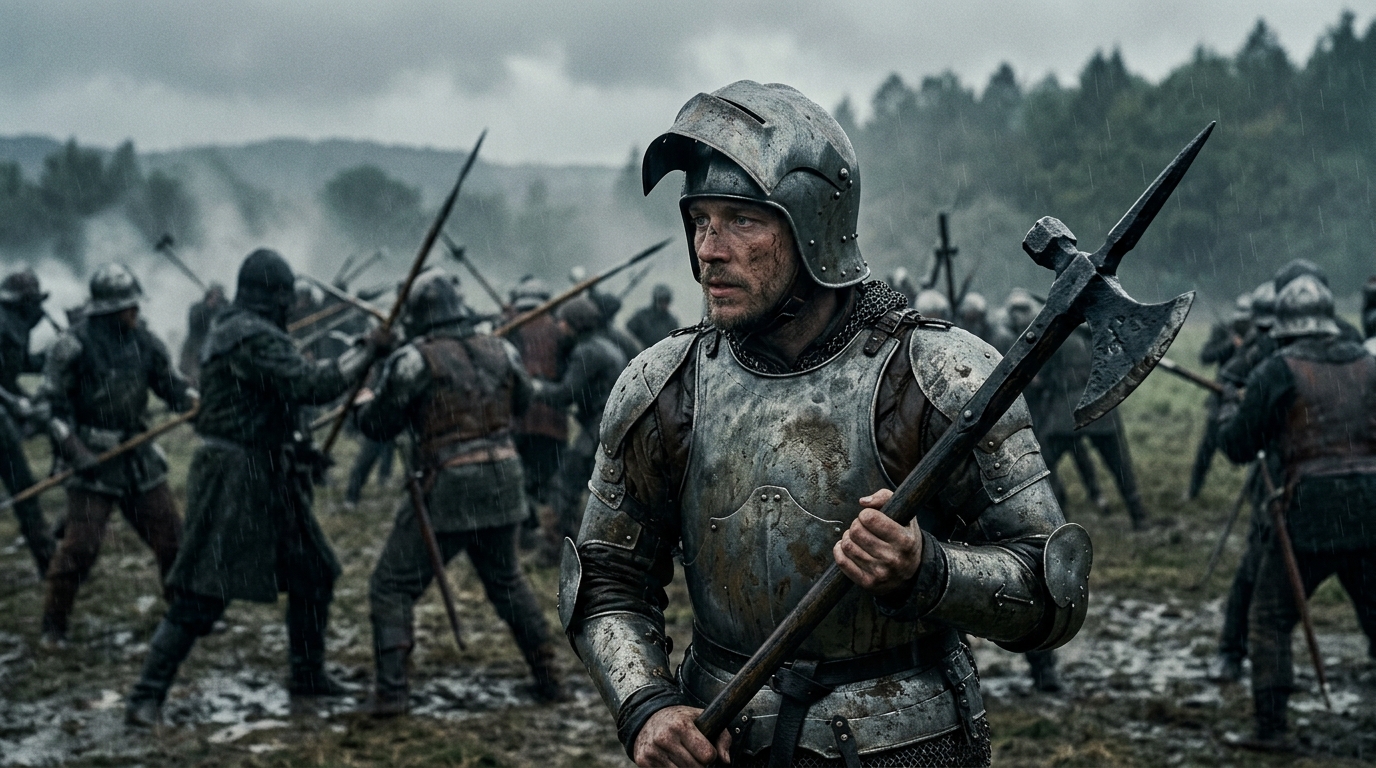
The pollaxe evolved in the late 14th century as a refined tournament weapon before becoming devastatingly effective in warfare. Featuring a hammer head, axe blade, and top spike on a 4-6 foot shaft, it weighed only 5-6 pounds and featured reinforcing metal strips called langets that prevented disarming. The weapon gained fame in 15th-century foot combat tournaments, where masters like Hans Talhoffer documented detailed fighting techniques combining strikes, grappling, and leverage. In a famous 1467 judicial combat, Thomas Woodstock fought with a pollaxe for 45 minutes to settle a legal dispute.
Tournament refinement created a weapon ideally suited for battlefield reality. Its superior balance allowed precise strikes and quick recovery against armored opponents—the hammer could crush helmets, the axe blade could hook legs, and the spike could thrust through armor gaps.
15. The Falchion – The Common Soldier’s Edge
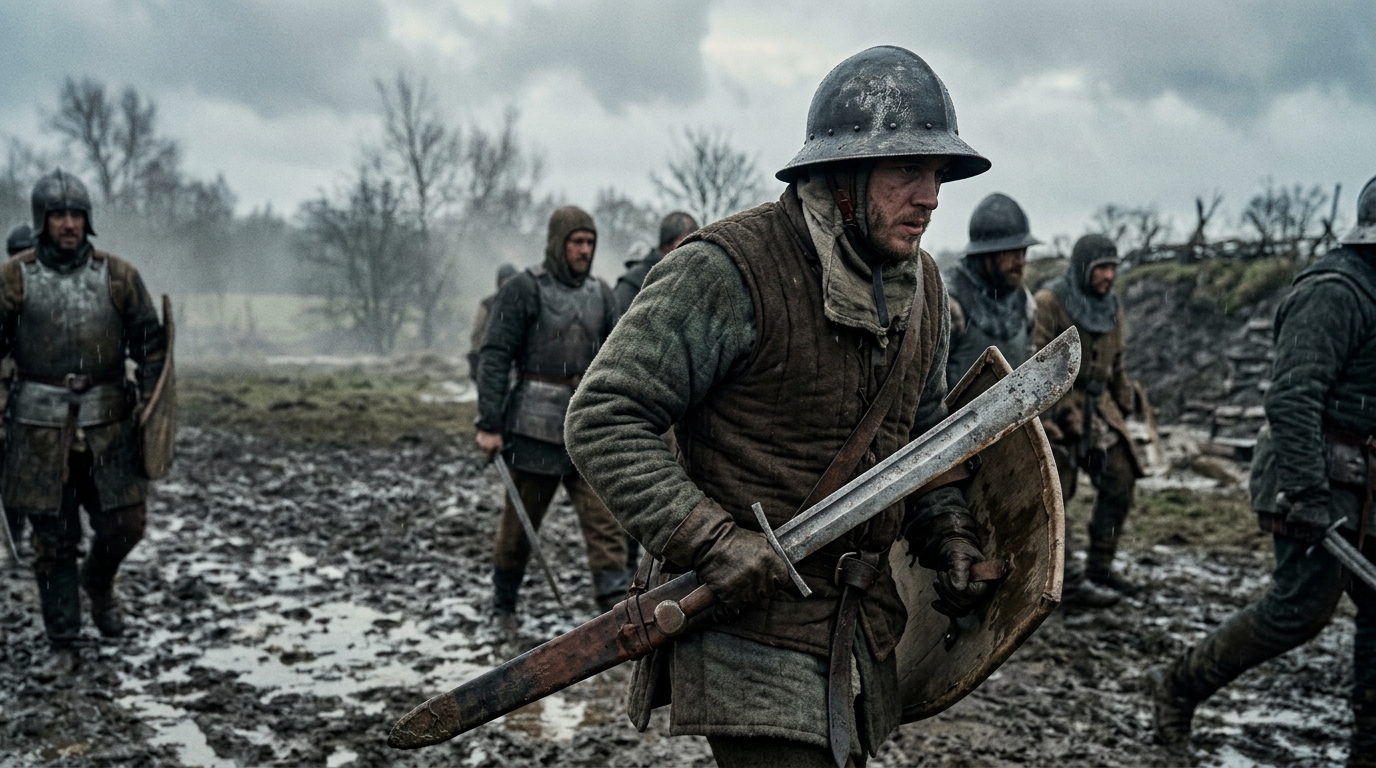
The falchion, a single-edged sword with a 14-to-16-inch blade, served as the common soldier’s weapon from the 13th through 15th centuries. While knights carried expensive double-edged swords, common soldiers and men-at-arms wielded falchions—cheaper to produce but devastatingly effective. The blade’s weight-forward design allowed powerful chopping strikes that could split helmets and sever limbs with force that fancier swords couldn’t match.
The Conyers Falchion, a 13th-century example in Durham Cathedral, weighs 3.5 pounds with a 30-inch blade featuring a distinctive widening toward the tip. Archaeological evidence from the 1361 Battle of Visby shows falchion wounds penetrating mail and causing catastrophic trauma—one recovered skull shows a strike that cleaved through the helmet and split it from crown to teeth.
Did You Know?
These 15 weapons didn’t just change how medieval battles were fought—they transformed the social fabric of warfare itself. The expensive longsword symbolized knighthood, but the democratic crossbow allowed peasants to kill nobles. The pike ended cavalry supremacy, while the trebuchet made supposedly impregnable castles vulnerable. Each innovation sparked counter-innovations in armor, tactics, and fortification, creating an arms race that drove military technology forward for centuries.
What’s remarkable is how these medieval innovations still influence modern warfare. The principle of combined arms—mixing different weapon types for tactical advantage—began with Swiss pike-and-halberd formations. The concept of force multiplication through technology started when crossbows allowed minimally trained soldiers to match aristocratic warriors. Even the social implications resonate today; medieval weapons democratized violence in ways that foreshadowed modern firearms.
Walking through museum halls displaying these artifacts, we see more than rust and steel. We see the weapons that decided whether kingdoms rose or fell, whether castles stood or crumbled, whether cavalry remained supreme or infantry reclaimed the battlefield. From the 11th-century crossbow to the 16th-century pike, these instruments of war shaped a millennium of European history and created tactical principles that still echo in modern military doctrine.
